


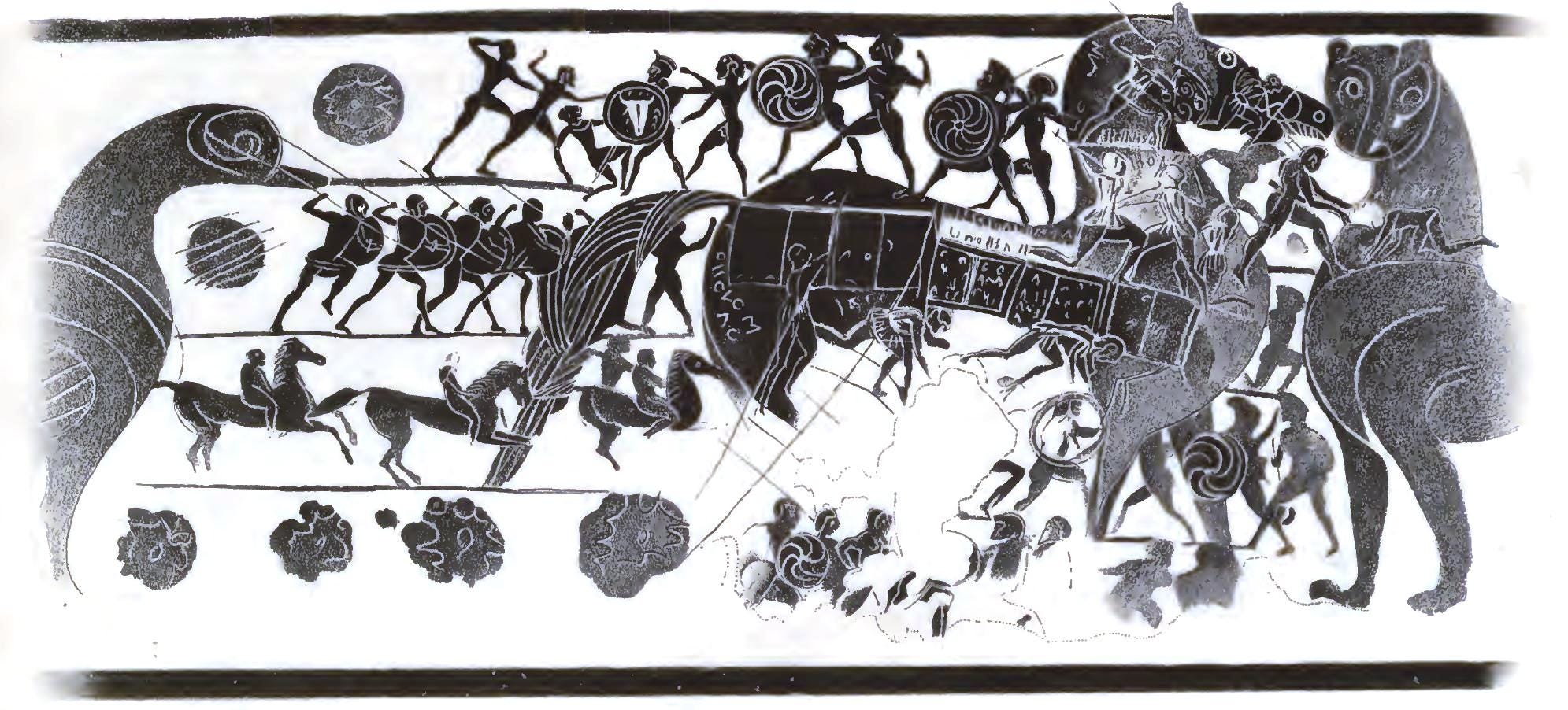
In 2026, surely everyone is aware of the Trojan Horse. In the Iliad, the Greeks were unable to conquer Troy via direct assault for a decade. In a brilliant change of tactics, the Greeks hid their soldiers inside of something that the Trojans would willingly bring through their own gates, escorting their enemy into their stronghold and sealing Troy’s fate. In the U.S. Congress, one piece of legislation, the National Defense Authorization Act (NDAA), has become a Trojan Horse: despite the increasing difficulty of getting bills passed in Congress, the NDAA has reliably passed every year for the past 65 years, and as a result, it has become the default vehicle for passing legislation that is less likely to survive on its own merits. The NDAA passes because it has to, and since it’s impossible to scrutinize the contents of an 800 page bill at the necessary level of detail, Congress, like the Trojans, usher NDAA through the gates to the president’s desk.
In FY2021, the Corporate Transparency Act, legislation that addressed money laundering and beneficial ownership requirements, rode the NDAA’s coattails to law despite having nothing to do with defense. In FY2025, the BIOSECURE Act, a measure that restricted U.S. government contracts with Chinese biotech companies, attempted the same tactic, but was cut from the FY2025 NDAA at the last minute (fear not, it was appended in FY 2026 and became law). The Congressional Research Service has called out this behavior directly, stating that “many policymakers and officials view the bill as a potential legislative vehicle for a range of policy matters.”
This tendency to append measures to the NDAA due to its “must pass” status is infuriating to me as someone who spent 25 years in national defense. Just because the NDAA is the likeliest bill to reach the president’s desk does not mean that it’s appropriate to stretch the definition of national security to pass legislation without the scrutiny it’s due. This year, the MATCH Act appears to be the next attempt to ride the NDAA into becoming law, and it’s a serious problem.
What the MATCH Act is
The MATCH Act was introduced in April of 2026 and seeks to restrict Chinese access to semiconductor manufacturing equipment. While on the surface, this seems like an appropriate economic approach to managing international competition with China, it is not so straightforward. As I wrote about previously, MATCH imposes real costs on American producers, relies on diplomatic threats to allied nations to drive compliance, and drives Chinese import substitution as the imperative for domestic indigenization becomes an immediate necessity rather than long-term strategic goal. The bill passed the House Foreign Affairs Committee as part of the “largest significant export control mark-up in the history of Congress” with over 20 other bills and now finds itself in the manager’s amendment of the FY2027 NDAA.
While this could seem like a wildly popular bill achieving catastrophic success, it actually demonstrates that it is not receiving adequate scrutiny, deliberation, and debate, as it passed as part of a bundle of legislation and is now nested within the NDAA. The level of obscurity surrounding the MATCH Act’s legislative progress is troubling because it has flipped the burden of proof. Lawmakers pushing MATCH no longer need to demonstrate that MATCH is good policy that deserves passing into law, they simply need to hope it isn’t obvious enough to get stripped out of the defense authorization measure.
Three Reasons for Standalone Deliberation
This is an important situation because MATCH is a policy with significant nuance and merits standalone deliberation. I have previously written on the topic, but will dive deeper in the interest of clarity.
First, it relies on allied coercion through the Foreign Direct Product Rule (FDPR). Since the U.S. is not the only or even the largest exporter of semiconductor manufacturing equipment, export controls on this equipment would require buy-in from the Netherlands and Japan, home to the largest (ASML) and second-largest (Tokyo Electron) semiconductor equipment manufacturers. The bill would give these countries just 150 days to adopt equivalent controls or face FDPR punishment. This is simply not enough time for a country to decide if a major company can afford to give up a major share of its revenue in service to another country’s policy decision. The Netherlands in particular formally protested during the Dutch royal visit to Washington in April of 2026. The Dutch government then went to China for trade discussions bringing representatives from a variety of companies including ASML. Since FDPR only applies to systems that integrate American technologies, a campaign of allied coercion raises the risk of a costly but strategically rational third path: reengineering their systems to not include American technology would remove all teeth from FDPR. This would be an expensive endeavor, but may prove more viable long-term if the U.S. adopts the coercive measures within MATCH.
Second, the MATCH Act, like other export control policies, will backfire. Similar restrictions have helped Chinese semiconductor equipment manufacturers gain market share. After similar restrictions on semiconductor manufacturing equipment, Chinese domestic semiconductor equipment use rose from 25% in 2024 to 35% in 2025, exceeding Beijing’s targets ahead of schedule. The true costs of these policies are borne by American firms, who saw a $130 billion aggregate decline in market capitalization, an 8.6% revenue drop, and a 6.6% reduction in employment. In addition to harming U.S. firms, the restrictions have sparked a push toward building out indigenous capabilities. A state-backed firm in Shanghai has begun to mass-produce DUV lithography machines, a capability leap that would provide Chinese chip manufacturers alternatives to ASML’s products. This demonstrates how export control efforts like the MATCH Act are accelerating Chinese progress rather than slowing it.
Third, the MATCH Act is being heavily lobbied for by a single company. Micron’s CEO held closed-door meetings with members of the House Foreign Affairs Committee a month prior to the vote and Senate Banking Committee Republicans. MATCH would hamper CXMT and YMTC, Micron’s direct competitors in the memory space, and exacerbate the global memory shortage that is driving up prices on consumer electronics, vehicles. Prices for personal computers are already up 15-20%, with memory consuming 35% of the total price (up from 18%). Warnings from the industry indicate that the shortage will persist past 2030 as is, and the MATCH Act stands to make the shortage more dramatic and more drawn out. Micron directly benefits from this shortage, and making it last longer would only help them more.
All three of these characteristics demonstrate that there is significant nuance around implementation of the MATCH Act and this nuance is worthy of deliberation that the NDAA process will not provide. They need to be thoroughly examined, not swept into law inside of an 800-page national security bill.
The NDAA Proves Less Reliable Than Expected
Senate Democrats blocked the NDAA on a cloture vote on July 14th. This dispute hinged on Iran war authorities and the overall $1.15 trillion price tag.
While one would expect a MATCH Act skeptic like me to be excited about this stall, it makes the situation even more dire. The particulars of the MATCH Act have been rightfully overshadowed by enormous geopolitical and budgetary issues in the NDAA, and debate is much more likely to focus on the issues that caused this “must pass” bill to stall. The war in Iran and the massive budget will no doubt receive much more attention than the unintended consequences of the MATCH Act, and there is a risk that a truly bad policy proposal will be enacted without deliberation due to the sense of urgency about passing the NDAA that grows daily.
Troy was sacked because none of the Trojans bothered to look inside the horse. The MATCH Act now sits within the NDAA and there is a real risk that it will roll through the gates unnoticed. Semiconductor export control policy is too nuanced and too consequential to pass by default.
What this means for
Policymakers: Stop appending bills to the NDAA, especially when they are only loosely related to national defense. I understand the thinking, but it robs policy proposals from receiving the scrutiny they need to avoid unintended consequences. MATCH in particular deserves evaluation beyond the surface levels, because it is unlikely to work in the way expected and will harm America’s ability to maintain technological superiority in the long term.
U.S. Strategic Competition: The competition between China and the United States is too complex to boil down to “denial hurts a nation, so we should deny China.” The economic factors at play are vast and interrelated, and “winning” against China requires more than unilateral effort from the United States. Taking blunt approaches, particularly in the economic sector, that alienate our allies and partners risks eroding the coalition required to maintain an edge over China. More importantly, there are strong indications that our denial efforts are helping China to break dependency on U.S. technology and increase their own capabilities, which is a far worse outcome than selling to them directly.
Tech Companies: The advancement of the MATCH Act and similar legislation should signal that policymakers have prioritized a strategy of denial at the expense of revenue for American companies and you should plan accordingly. Unfortunately, this means that now is not the time for large investments and innovation in the semiconductor equipment space. Outside equipment manufacturers, expect the memory shortage to get much worse and prepare for the backlash from passing higher costs along to consumers.
Aspiring Strategic Thinkers: Remember that the manner in which you implement your strategy constrains the strategy itself. In some organizations, hard decisions are buried in routine processes to avoid confrontation. This is why acquisition officials sometimes bundle risky defense programs into larger portfolios to shield them from standalone scrutiny. Just because it’s routine doesn’t make it good policymaking. Applying the NDAA-as-a-vehicle practice to measures only tangentially related to defense is an exercise in how to pass legislation, rather than what to pass or why to pass it.